
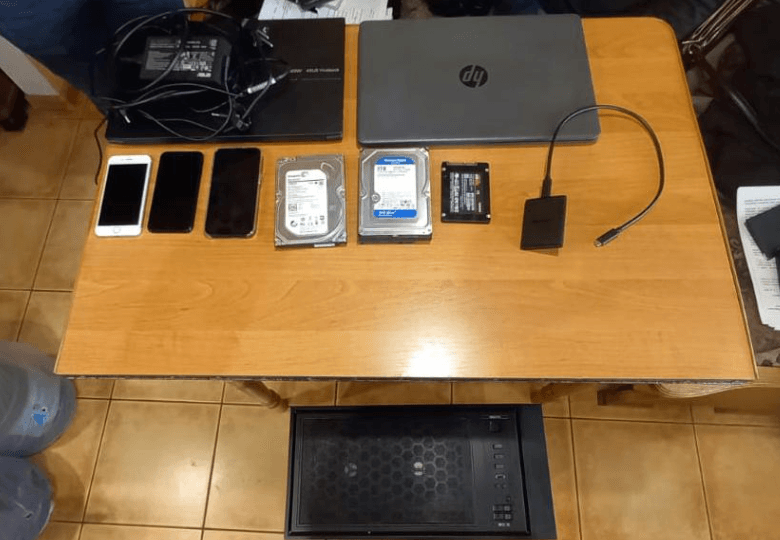
Ukraine cyber police, along with the national police, arrested three hackers attempting to sell 100 million compromised emails and Instagram accounts.
The Ukraine cyber police and the national police have arrested three individuals who are suspected to have hacked over 100 million emails and Instagram accounts worldwide and offered them for sale.
The three men obtained the account credentials by carrying out brute-force attacks, then sold them to other cybercriminals through darknet marketplaces and hacking forums.
“The cyber police of Kharkiv region, together with the investigators of the State Police of the region, under the procedural guidance of the Kharkiv regional prosecutor’s office, identified three criminals aged between 20 and 40 who stole the e-mail accounts and accounts of the Instagram social network of Internet users.” reads the press release published by Ukraine cyber police. “The extras used the brute force method, i.e. selecting a password by sorting through a large number of password phrases using special software.”
The accomplices resided in various regions of Ukraine. Each member received specific tasks from the mastermind, they compiled the databases with the data of the hacked accounts and offered them for sale on the dark web.
The members of this group have compiled a database of stolen accounts from over 100 million internet users worldwide over the years.
The Ukraine cyber police reported that the buyers of the compromised accounts used them in various fraudulent activities, including the “Friend Asks for a Loan” scheme.
The “Friend Asks for a Loan” scheme in cybercrime involves fraudsters impersonating a victim’s friend or acquaintance and reaching out to them via email, social media, or messaging apps. The fraudster fabricates a story about being in a financial crisis or urgent situation and asks the victim to lend them money. They often manipulate the victim’s emotions or exploit their trust to convince them to send money. However, in reality, the person asking for the loan is not the victim’s friend but a scammer using stolen or spoofed identity information.
Ukraine police carried out seven raids at the individuals’ homes in Kyiv, Odesa, Vinnytsia, and Ivano-Frankivsk. The agents seized more than 70 pieces of computer equipment, 14 mobile phones, credit cards, and cash amounting to over $3,000.

The authorities charged the three suspects with unauthorized access to information systems and networks, which can lead to a sentence of up to 15 years in prison under Ukrainian law.
The police are also investigating the potential use of the stolen accounts by Russia-linked nation-state actors.
Users are recommended to protect their accounts by enabling two-factor authentication and using strong passwords.
It is important to underline the effort of the Ukrainian police, which operates in a challenging context due to the Russian invasion. This operation is just the latest success of an efficient cyber division.
Follow me on Twitter: @securityaffairs and Facebook and Mastodon
(SecurityAffairs – hacking, Ukraine cyber police)


