
Security Affairs
Two Barracuda ESG Flaws Could Be Combined for Full Root Access; Patches Released|Cyberattack Hits French Blood Banks as Hackers Target Refrigeration Systems Across Europe|CVE-2026-58868: Critical Android Bug Could Let Attackers Run Remote Code|U.S. CISA adds WordPress flaw to its Known Exploited Vulnerabilities catalog|Binance Hack: How Fake Job Interviews and AI Abuse Led to a $6.34 Billion Attack|Synology Warns of Ransomware Attacks Targeting NAS Devices Running Outdated DSM Versions|Inside XCPE, the botnet that turned 1.3M set-top boxes into proxy servers|NIS2 Makes Board Members Personally Liable for Access Control Decisions|Apple’s spyware notifications reach the Bundestag: what the BSI says to do now|VOLTA, the infostealer that asks an AI which victims are worth the effort|New wave of fridge cyberattacks hits European supermarkets, this time in Belgium, Luxembourg, Sweden and Estonia|Hackers Send Fake Nuclear Threat Alerts to Ukrainian and Russian Citizens|Two Barracuda ESG Flaws Could Be Combined for Full Root Access; Patches Released|Cyberattack Hits French Blood Banks as Hackers Target Refrigeration Systems Across Europe|CVE-2026-58868: Critical Android Bug Could Let Attackers Run Remote Code|U.S. CISA adds WordPress flaw to its Known Exploited Vulnerabilities catalog|Binance Hack: How Fake Job Interviews and AI Abuse Led to a $6.34 Billion Attack|Synology Warns of Ransomware Attacks Targeting NAS Devices Running Outdated DSM Versions|Inside XCPE, the botnet that turned 1.3M set-top boxes into proxy servers|NIS2 Makes Board Members Personally Liable for Access Control Decisions|Apple’s spyware notifications reach the Bundestag: what the BSI says to do now|VOLTA, the infostealer that asks an AI which victims are worth the effort|New wave of fridge cyberattacks hits European supermarkets, this time in Belgium, Luxembourg, Sweden and Estonia|Hackers Send Fake Nuclear Threat Alerts to Ukrainian and Russian Citizens|
Advertisement

Ad Placeholder

Full Width × 90

Breaking News

Time to update your Veeam to fix a VeeamVixProxy Vulnerability

The vulnerability allows a local unprivileged user of a Windows guest to gain Local and/or Domain Administrator access when VeeamVixProxy is active, the de-facto default in VMWare and Hyper-V environments. Pasquale `sid` Fiorillo, Francesco `ascii` Ongaro from ISGroup, an Italian Security firm, and Antonio `s4tan` Parata from ush team, have just released a critical security […]

Time to update your Veeam to fix a VeeamVixProxy Vulnerability

The vulnerability allows a local unprivileged user of a Windows guest to gain Local and/or Domain Administrator access when VeeamVixProxy is active, the de-facto default in VMWare and Hyper-V environments.

Pasquale `sid` Fiorillo, Francesco `ascii` Ongaro from ISGroup, an Italian Security firm, and Antonio `s4tan` Parata from ush team, have just released a critical security advisory for any version of Veeam Backup & Replication prior to 8 Update 3 (released today, October 8th, 2015).

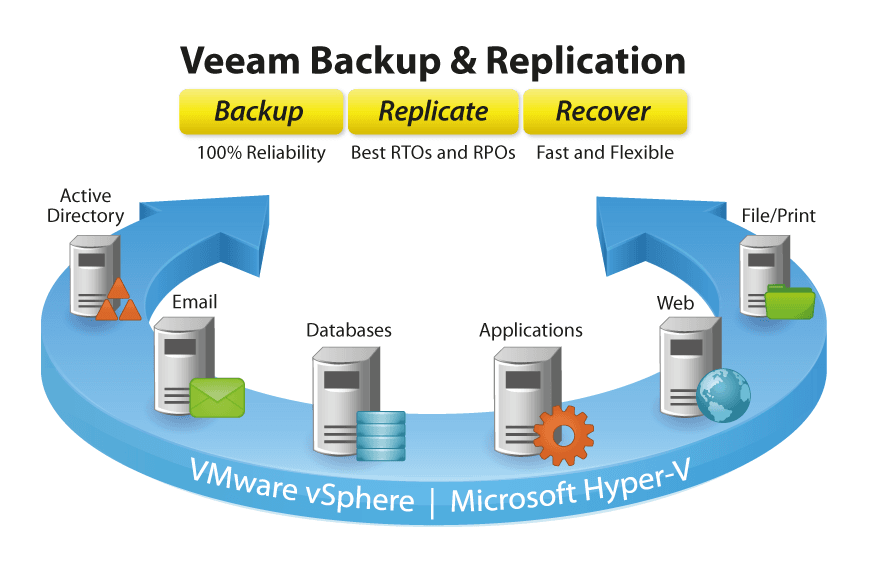
Veeam Software provides backup, disaster recovery and virtualizationmanagement software for the VMware and Hyper-V environments. The ISGroup team has discovered this 0day in the Veeam Software while performing a Penetration Test for a customer.

“The vulnerability allows a local unprivileged user of a Windows guest to gain Local and/or Domain Administrator access when VeeamVixProxy is active, the de-facto default in VMWare and Hyper-V environments.” states the advisory.

The issue potentially involves 157,000 customers and 9.1 million Virtual Machines worldwide and could lead to full Domain Administrator compromise of the affected infrastructures.

veeam _6_7_8 vixproxy vulnerability

This vulnerability is caused by a component, VeeamVixProxy, that logs in an obfuscated way the administrator username and password used by Veeam to run.

An attacker could easily “decode” the password in cleartext. From subsequent analysis, it turns out that Veeam’s admin user is often a Domain Administrator user and this enables a scenario in which an unprivileged user, or even a hacked IIS website, inside a single Virtual Machine, can escalate his privileges to Domain Administrator.

Even if Domain escalation is not possible, the attacker will at least get the Local Administrator’s credentials.

Users are strongly advised to update their systems to the latest version released by the vendor.

About the Author Francesco Ongaro

Senior Security Researcher at ISGroup

Edited by Pierluigi Paganini

(Security Affairs – Veeam Backup & Replication , hacking)


