
Security Affairs
Cyberattack Hits French Blood Banks as Hackers Target Refrigeration Systems Across Europe|CVE-2026-58868: Critical Android Bug Could Let Attackers Run Remote Code|U.S. CISA adds WordPress flaw to its Known Exploited Vulnerabilities catalog|Binance Hack: How Fake Job Interviews and AI Abuse Led to a $6.34 Billion Attack|Synology Warns of Ransomware Attacks Targeting NAS Devices Running Outdated DSM Versions|Inside XCPE, the botnet that turned 1.3M set-top boxes into proxy servers|NIS2 Makes Board Members Personally Liable for Access Control Decisions|Apple’s spyware notifications reach the Bundestag: what the BSI says to do now|VOLTA, the infostealer that asks an AI which victims are worth the effort|New wave of fridge cyberattacks hits European supermarkets, this time in Belgium, Luxembourg, Sweden and Estonia|Hackers Send Fake Nuclear Threat Alerts to Ukrainian and Russian Citizens|Chainalysis Investigates Security Incident Involving AI-Driven Attack Techniques|Cyberattack Hits French Blood Banks as Hackers Target Refrigeration Systems Across Europe|CVE-2026-58868: Critical Android Bug Could Let Attackers Run Remote Code|U.S. CISA adds WordPress flaw to its Known Exploited Vulnerabilities catalog|Binance Hack: How Fake Job Interviews and AI Abuse Led to a $6.34 Billion Attack|Synology Warns of Ransomware Attacks Targeting NAS Devices Running Outdated DSM Versions|Inside XCPE, the botnet that turned 1.3M set-top boxes into proxy servers|NIS2 Makes Board Members Personally Liable for Access Control Decisions|Apple’s spyware notifications reach the Bundestag: what the BSI says to do now|VOLTA, the infostealer that asks an AI which victims are worth the effort|New wave of fridge cyberattacks hits European supermarkets, this time in Belgium, Luxembourg, Sweden and Estonia|Hackers Send Fake Nuclear Threat Alerts to Ukrainian and Russian Citizens|Chainalysis Investigates Security Incident Involving AI-Driven Attack Techniques|
Advertisement

Ad Placeholder

Full Width × 90

Hacking

VPN vulnerability in Android devices allows intercept communications

Israeli Security researchers discovered an Android security flaw to bypass active VPN configurations and intercept secure communications. A new alleged flaw in Android mobile could harm user’s privacy over VPN. Israeli security researchers from the Ben Gurion University (BGU), the same that discovered a few weeks ago a vulnerability in the Samsung Knox platform, have […]

VPN vulnerability in Android devices allows intercept communications

Israeli Security researchers discovered an Android security flaw to bypass active VPN configurations and intercept secure communications.

A new alleged flaw in Android mobile could harm user’s privacy over VPN. Israeli security researchers from the Ben Gurion University (BGU), the same that discovered a few weeks ago a vulnerability in the Samsung Knox platform, have uncovered a new flaw in the Android OS. They discovered a vulnerability that allowed them to bypass active VPN configurations and intercept secure communications.
As explained by the researchers, an attacker doesn’t need root permissions to eavesdrop data transmissions in stealth way. The researchers

“This vulnerability enables malicious apps  to bypass active VPN configuration (no ROOT permissions required) and redirect secure data communications to a different network address. These communications are captured in CLEAR TEXT (no encryption), leaving the information completely exposed. This redirection can take place while leaving the user completely oblivious, believing the data is encrypted and secure.”  wrote BGU member Dudu Mimran.

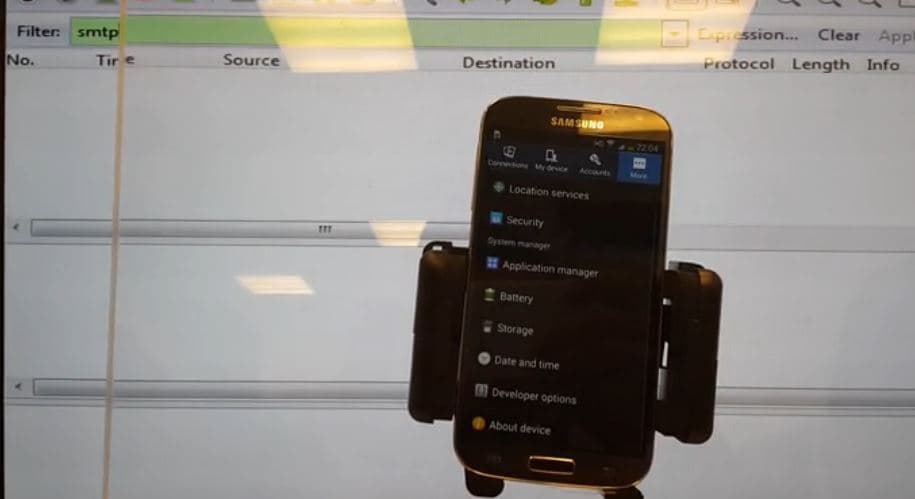
The experts have tested the vulnerability on several Android devices from various vendors, they also provided a video POC to demonstrate how simple is the traffic eavesdropping.

VPN Android flaw 2

“SSL/TLS traffic can be also captured with this exploit but the content stays encrypted and not in clear text. ” confirmed the researchers.

As remarked in the post the tests have been performed on a properly configured VPN with WI-Fi connections, and an attacker’s PC connected on the same network as the targeted Smartphone.

The vulnerability has been reported to Google, I’m curious to see the reply of its security team, in the last week security team at Samsung refused to consider the bug on Knox as a vulnerability.

BGU researchers noted that the attack against VPN users is different from the one targeting the Samsung Knox.

Pierluigi Paganini

(Security Affairs –  Android, VPN)


