
Security Affairs
U.S. Charges Canadian Man in Alleged Hack of University Supercomputers|Two Barracuda ESG Flaws Could Be Combined for Full Root Access; Patches Released|Cyberattack Hits French Blood Banks as Hackers Target Refrigeration Systems Across Europe|CVE-2026-58868: Critical Android Bug Could Let Attackers Run Remote Code|U.S. CISA adds WordPress flaw to its Known Exploited Vulnerabilities catalog|Binance Hack: How Fake Job Interviews and AI Abuse Led to a $6.34 Billion Attack|Synology Warns of Ransomware Attacks Targeting NAS Devices Running Outdated DSM Versions|Inside XCPE, the botnet that turned 1.3M set-top boxes into proxy servers|NIS2 Makes Board Members Personally Liable for Access Control Decisions|Apple’s spyware notifications reach the Bundestag: what the BSI says to do now|VOLTA, the infostealer that asks an AI which victims are worth the effort|New wave of fridge cyberattacks hits European supermarkets, this time in Belgium, Luxembourg, Sweden and Estonia|U.S. Charges Canadian Man in Alleged Hack of University Supercomputers|Two Barracuda ESG Flaws Could Be Combined for Full Root Access; Patches Released|Cyberattack Hits French Blood Banks as Hackers Target Refrigeration Systems Across Europe|CVE-2026-58868: Critical Android Bug Could Let Attackers Run Remote Code|U.S. CISA adds WordPress flaw to its Known Exploited Vulnerabilities catalog|Binance Hack: How Fake Job Interviews and AI Abuse Led to a $6.34 Billion Attack|Synology Warns of Ransomware Attacks Targeting NAS Devices Running Outdated DSM Versions|Inside XCPE, the botnet that turned 1.3M set-top boxes into proxy servers|NIS2 Makes Board Members Personally Liable for Access Control Decisions|Apple’s spyware notifications reach the Bundestag: what the BSI says to do now|VOLTA, the infostealer that asks an AI which victims are worth the effort|New wave of fridge cyberattacks hits European supermarkets, this time in Belgium, Luxembourg, Sweden and Estonia|
Advertisement

Ad Placeholder

Full Width × 90

Breaking News

Exclusive: TIM’s Red Team Research finds 4 zero-days in WOWZA Streaming Engine product

Researchers from TIM’s Red Team Research (RTR) have discovered another 4 new zero-day vulnerabilities in the WOWZA Streaming Engine product. Last month, the TIM’s Red Team Research (RTR) disclosed 2 new vulnerabilities affecting the Oracle Business Intelligence product with High severity. Today, the TIM’s Red Team Research led by Massimiliano Brolli, discovered 4 new vulnerabilities […]

WOWZA Streaming Engine

Researchers from TIM’s Red Team Research (RTR) have discovered another 4 new zero-day vulnerabilities in the WOWZA Streaming Engine product.

Last month, the TIM’s Red Team Research (RTR) disclosed 2 new vulnerabilities affecting the Oracle Business Intelligence product with High severity. Today, the TIM’s Red Team Research led by Massimiliano Brolli, discovered 4 new vulnerabilities that have been addressed by the manufacturer WOWZA Streaming Engine, between the end of 2019 and July 2020.

WOWZA Streaming Engine

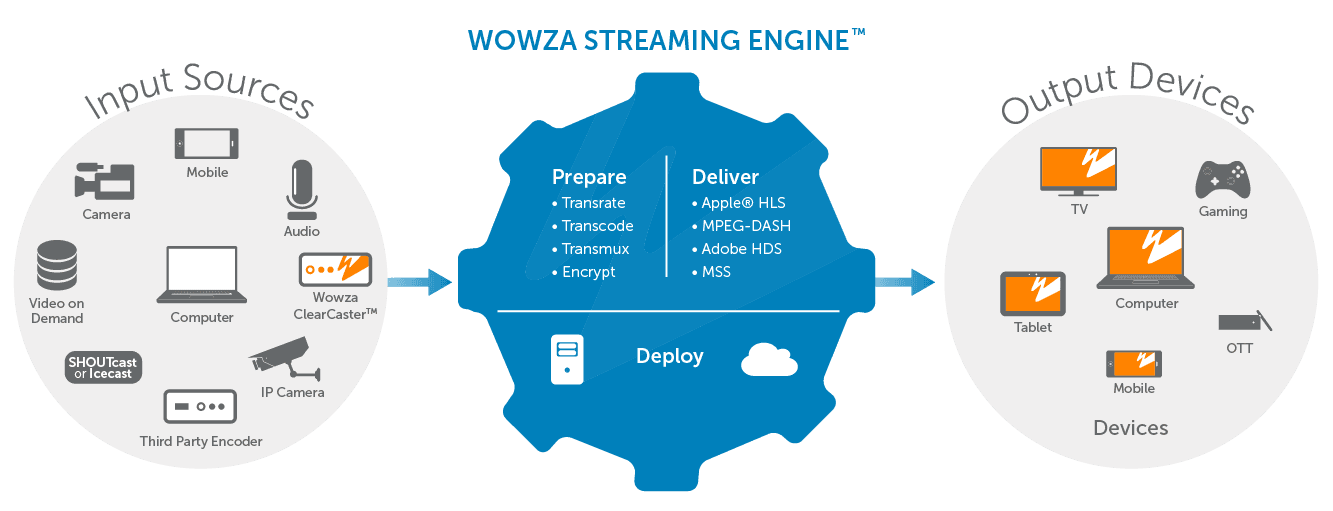
Wowza Streaming Engine (known as Wowza Media Server) is a unified streaming media server software developed by Wowza Media Systems based in Colorado, in the United States of America and used by many US government entities such as NASA, US Air force, Boeing, New York Police Department and many other clients around the world.

The vulnerabilities discovered by the team, tracked as CVE-2019-19454, CVE-2019-19455, CVE-2019-19453 and CVE-2019-19456, are an “Arbitrary File Download”, “Path traversal” and 2 “Cross-site Scripting” (the first two with High Severity and the others with Medium one) respectively. The issues were discovered during laboratory tests, promptly managed in a CVD (Coordinated Vulnerability Disclosure) process with the vendor.

Some of these vulnerabilities can be chained together by a remote attacker to execute arbitrary code on the impacted system, they can also provide full access to all the data it contains, through the user interface.

The laboratory has been active for less than a year (based on the registered CVE) and unknown vulnerabilities have already been identified on various products including NOKIA, Selesta, and Oracle. The research team has identified a total of 16 new published CVEs, as reported on the NVD (National Vulnerability Database) and on TIM’s Corporate website, available at https://www.gruppotim.it/redteam.

TIM is one of the very few Italian industrial realities to conduct research of undocumented vulnerabilities, for this reason I suggest you to follow them carefully.

[adrotate banner=”9″][adrotate banner=”12″]

Pierluigi Paganini

(SecurityAffairs – hacking, WOWZA Streaming Engine)

[adrotate banner=”5″]

[adrotate banner=”13″]


