
Security Affairs
CVE-2026-58868: Critical Android Bug Could Let Attackers Run Remote Code|U.S. CISA adds WordPress flaw to its Known Exploited Vulnerabilities catalog|Binance Hack: How Fake Job Interviews and AI Abuse Led to a $6.34 Billion Attack|Synology Warns of Ransomware Attacks Targeting NAS Devices Running Outdated DSM Versions|Inside XCPE, the botnet that turned 1.3M set-top boxes into proxy servers|NIS2 Makes Board Members Personally Liable for Access Control Decisions|Apple’s spyware notifications reach the Bundestag: what the BSI says to do now|VOLTA, the infostealer that asks an AI which victims are worth the effort|New wave of fridge cyberattacks hits European supermarkets, this time in Belgium, Luxembourg, Sweden and Estonia|Hackers Send Fake Nuclear Threat Alerts to Ukrainian and Russian Citizens|Chainalysis Investigates Security Incident Involving AI-Driven Attack Techniques|FBI Blames North Korea for $6 Billion Binance Crypto Theft|CVE-2026-58868: Critical Android Bug Could Let Attackers Run Remote Code|U.S. CISA adds WordPress flaw to its Known Exploited Vulnerabilities catalog|Binance Hack: How Fake Job Interviews and AI Abuse Led to a $6.34 Billion Attack|Synology Warns of Ransomware Attacks Targeting NAS Devices Running Outdated DSM Versions|Inside XCPE, the botnet that turned 1.3M set-top boxes into proxy servers|NIS2 Makes Board Members Personally Liable for Access Control Decisions|Apple’s spyware notifications reach the Bundestag: what the BSI says to do now|VOLTA, the infostealer that asks an AI which victims are worth the effort|New wave of fridge cyberattacks hits European supermarkets, this time in Belgium, Luxembourg, Sweden and Estonia|Hackers Send Fake Nuclear Threat Alerts to Ukrainian and Russian Citizens|Chainalysis Investigates Security Incident Involving AI-Driven Attack Techniques|FBI Blames North Korea for $6 Billion Binance Crypto Theft|
Advertisement

Ad Placeholder

Full Width × 90

Breaking News

Expert found a critical RCE zero-day in TP-Link Wi-Fi Extenders

A zero-day vulnerability affects multiple models of TP-Link Wi-Fi extenders, it could be exploited to remotely execute code. Security expert Grzegorz Wypych from IBM X-Force found a zero-day flaw that affects multiple models of TP-Link Wi-Fi extenders. The Wi-Fi extenders capture the Wi-Fi signal from the main network device and rebroadcast it to areas where […]

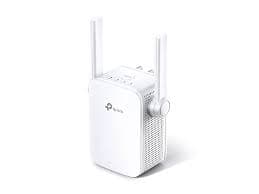
RE365 TP-Link Wi-Fi extenders

A zero-day vulnerability affects multiple models of TP-Link Wi-Fi extenders, it could be exploited to remotely execute code.

Security expert Grzegorz Wypych from IBM X-Force found a zero-day flaw that affects multiple models of TP-Link Wi-Fi extenders.

The Wi-Fi extenders capture the Wi-Fi signal from the main network device and rebroadcast it to areas where the signal is weak.

RE365 TP-Link Wi-Fi extenders

The vulnerability discovered by the expert could be exploited to remotely execute code on vulnerable devices and get complete control over the device and command it with the same privileges of the device’s legitimate user.

“As part of a recent series of vulnerabilities discovered in home routers, IBM X-Force researcher Grzegorz Wypych discovered a zero-day flaw in a TP-Link Wi-Fi extender.” reads the advisory published by IBM. “If exploited, this remote code execution (RCE) vulnerability can allow arbitrary command execution via a malformed user agent field in HTTP headers.”

The RCE flaw affects TP-Link Wi-Fi Extender models RE365, RE650, RE350 and RE500 running firmware version 1.0.2, build 20180213.

The flaw could be exploited by an unauthenticated remote attacker, the attack doesn’t require privilege escalation since all processes on the vulnerable devices already run with root-level access.

The extender operates on the MIPS architecture, like many routers, the zero-day flaw can be triggered

TP-Link’s Wi-Fi extenders operate on MIPS architecture and the vulnerability can be triggered by sending a malformed HTTP request.

The HTTP request that can allow the execution of any shell command on the targeted RE365 Wi-Fi extender.

“The following image shows an open telnet session from a fully compromised device. After connecting to TCP port 4444 we were able to obtain root level shell on the Wi-Fi extender without any privilege escalation, with all processes running as root.” continues the analysis.

TP-Link Wi-Fi extenders

“The sort of impact one can expect from such unauthenticated access is, for example, requesting the device to browse to a botnet command and control server or an infection zone,”

The experts warn of the risks of massive attacks on IoT devices carried out thought Mirai-like bots.

TP-Link already released security patches to address the zero-day flaw, the vendor published separated updates for each of the impacted models of Wi-Fi extenders (RE365, RE500, RE650, RE350).

[adrotate banner=”9″] [adrotate banner=”12″]

Pierluigi Paganini

(SecurityAffairs – TP-Link Wi-Fi extenders, hacking)

[adrotate banner=”5″]

[adrotate banner=”13″]


