
Security Affairs
Two Barracuda ESG Flaws Could Be Combined for Full Root Access; Patches Released|Cyberattack Hits French Blood Banks as Hackers Target Refrigeration Systems Across Europe|CVE-2026-58868: Critical Android Bug Could Let Attackers Run Remote Code|U.S. CISA adds WordPress flaw to its Known Exploited Vulnerabilities catalog|Binance Hack: How Fake Job Interviews and AI Abuse Led to a $6.34 Billion Attack|Synology Warns of Ransomware Attacks Targeting NAS Devices Running Outdated DSM Versions|Inside XCPE, the botnet that turned 1.3M set-top boxes into proxy servers|NIS2 Makes Board Members Personally Liable for Access Control Decisions|Apple’s spyware notifications reach the Bundestag: what the BSI says to do now|VOLTA, the infostealer that asks an AI which victims are worth the effort|New wave of fridge cyberattacks hits European supermarkets, this time in Belgium, Luxembourg, Sweden and Estonia|Hackers Send Fake Nuclear Threat Alerts to Ukrainian and Russian Citizens|Two Barracuda ESG Flaws Could Be Combined for Full Root Access; Patches Released|Cyberattack Hits French Blood Banks as Hackers Target Refrigeration Systems Across Europe|CVE-2026-58868: Critical Android Bug Could Let Attackers Run Remote Code|U.S. CISA adds WordPress flaw to its Known Exploited Vulnerabilities catalog|Binance Hack: How Fake Job Interviews and AI Abuse Led to a $6.34 Billion Attack|Synology Warns of Ransomware Attacks Targeting NAS Devices Running Outdated DSM Versions|Inside XCPE, the botnet that turned 1.3M set-top boxes into proxy servers|NIS2 Makes Board Members Personally Liable for Access Control Decisions|Apple’s spyware notifications reach the Bundestag: what the BSI says to do now|VOLTA, the infostealer that asks an AI which victims are worth the effort|New wave of fridge cyberattacks hits European supermarkets, this time in Belgium, Luxembourg, Sweden and Estonia|Hackers Send Fake Nuclear Threat Alerts to Ukrainian and Russian Citizens|
Advertisement

Ad Placeholder

Full Width × 90

Breaking News

New Go-based botnet Zerobot exploits dozens of flaws

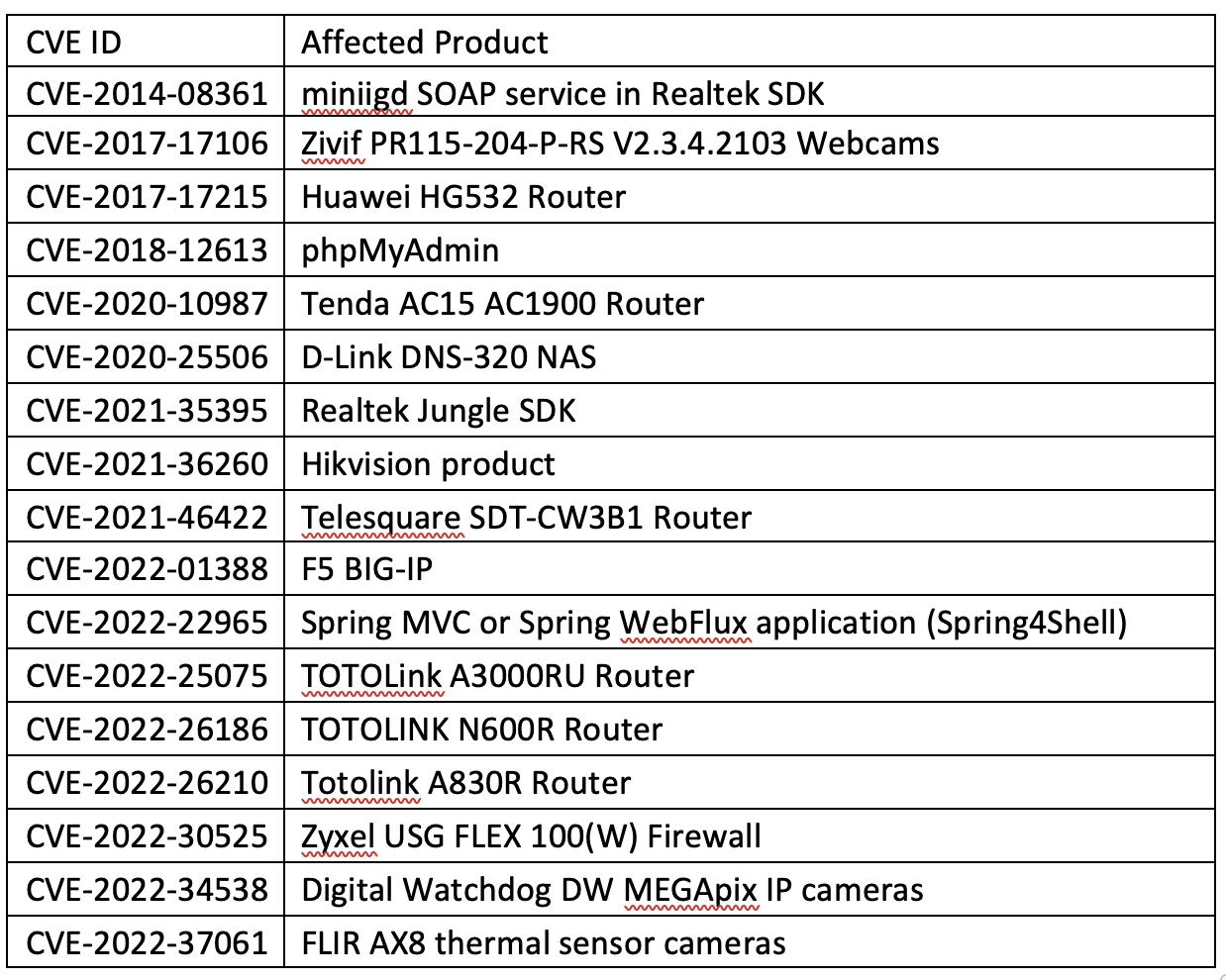
Researchers discovered a new Go-based botnet called Zerobot that exploits two dozen security vulnerabilities IoT devices. Fortinet FortiGuard Labs researchers have discovered a new Go-based botnet called Zerobot that spreads by exploiting two dozen security vulnerabilities in the internet of things (IoT) devices and other applications. “This botnet, known as Zerobot, contains several modules, including self-replication, attacks for different protocols, […]

Zerobot botnet

Researchers discovered a new Go-based botnet called Zerobot that exploits two dozen security vulnerabilities IoT devices.

Fortinet FortiGuard Labs researchers have discovered a new Go-based botnet called Zerobot that spreads by exploiting two dozen security vulnerabilities in the internet of things (IoT) devices and other applications.

“This botnet, known as Zerobot, contains several modules, including self-replication, attacks for different protocols, and self-propagation.” reads the advisory published by Fortinet. “It also communicates with its command-and-control server using the WebSocket protocol. Based on some IPS signatures trigger count, this campaign started its distribution of the current version sometime after mid-November.

Zerobot targets multiple architectures, including i386, amd64, arm, arm64, mips, mips64, mips64le, mipsle, ppc64, ppc64le, riscv64, and s390x. The bot is saved using the filename “zero.”

The malware first appeared in the wild on November 18, 2022 targeting devices running on Linux operating system.

The researchers discovered two versions of the bot, the first employed in attacks before November 24 that only supports basic functions. The current version includes a “selfRepo” module to spread infecting more endpoints with different protocols or vulnerabilities.

Zerobot botnet

Once infected the system, the bot contacts the remote command-and-control (C2) server and awaits further instructions.

Below is the list of supported commands:

CommandDetail
pingHeartbeat, maintaining the connection
attackLaunch attack for different protocols: TCP, UDP, TLS, HTTP, ICMP
stopStop attack
updateInstall update and restart Zerobot
enable_scanScan for open ports and start spreading itself via exploit or SSH/Telnet cracker
disable_scanDisable scanning
commandRunning OS command, cmd on Windows and bash on Linux
killKill botnet program

“Within a very short time, it was updated with string obfuscation, a copy file module, and a propagation exploit module that make it harder to detect and gives it a higher capability to infect more devices.” concludes the report.

Follow me on Twitter: @securityaffairs and Facebook and Mastodon

[adrotate banner=”9″][adrotate banner=”12″]

Pierluigi Paganini

(SecurityAffairs – hacking, Zerobot)

[adrotate banner=”5″]

[adrotate banner=”13″]


