
Security Affairs
Cyberattack Hits French Blood Banks as Hackers Target Refrigeration Systems Across Europe|CVE-2026-58868: Critical Android Bug Could Let Attackers Run Remote Code|U.S. CISA adds WordPress flaw to its Known Exploited Vulnerabilities catalog|Binance Hack: How Fake Job Interviews and AI Abuse Led to a $6.34 Billion Attack|Synology Warns of Ransomware Attacks Targeting NAS Devices Running Outdated DSM Versions|Inside XCPE, the botnet that turned 1.3M set-top boxes into proxy servers|NIS2 Makes Board Members Personally Liable for Access Control Decisions|Apple’s spyware notifications reach the Bundestag: what the BSI says to do now|VOLTA, the infostealer that asks an AI which victims are worth the effort|New wave of fridge cyberattacks hits European supermarkets, this time in Belgium, Luxembourg, Sweden and Estonia|Hackers Send Fake Nuclear Threat Alerts to Ukrainian and Russian Citizens|Chainalysis Investigates Security Incident Involving AI-Driven Attack Techniques|Cyberattack Hits French Blood Banks as Hackers Target Refrigeration Systems Across Europe|CVE-2026-58868: Critical Android Bug Could Let Attackers Run Remote Code|U.S. CISA adds WordPress flaw to its Known Exploited Vulnerabilities catalog|Binance Hack: How Fake Job Interviews and AI Abuse Led to a $6.34 Billion Attack|Synology Warns of Ransomware Attacks Targeting NAS Devices Running Outdated DSM Versions|Inside XCPE, the botnet that turned 1.3M set-top boxes into proxy servers|NIS2 Makes Board Members Personally Liable for Access Control Decisions|Apple’s spyware notifications reach the Bundestag: what the BSI says to do now|VOLTA, the infostealer that asks an AI which victims are worth the effort|New wave of fridge cyberattacks hits European supermarkets, this time in Belgium, Luxembourg, Sweden and Estonia|Hackers Send Fake Nuclear Threat Alerts to Ukrainian and Russian Citizens|Chainalysis Investigates Security Incident Involving AI-Driven Attack Techniques|
Advertisement

Ad Placeholder

Full Width × 90

Breaking News

Hackers are using Zerologon exploits in attacks in the wild

Microsoft is warning of threat actors that are actively using the Windows Server Zerologon exploits in attacks in the wild. Microsoft has published a series of Tweets to warn of attackers that are actively exploiting the Windows Server Zerologon in attacks in the wild. The IT giant is urging Windows administrators to install the released […]

ZeroLogon

Microsoft is warning of threat actors that are actively using the Windows Server Zerologon exploits in attacks in the wild.

Microsoft has published a series of Tweets to warn of attackers that are actively exploiting the Windows Server Zerologon in attacks in the wild. The IT giant is urging Windows administrators to install the released security updates as soon as possible.

Microsoft also shared sample exploits IoCs [1, 2, 3], which are .NET executables with the filename ‘SharpZeroLogon.exe.’  

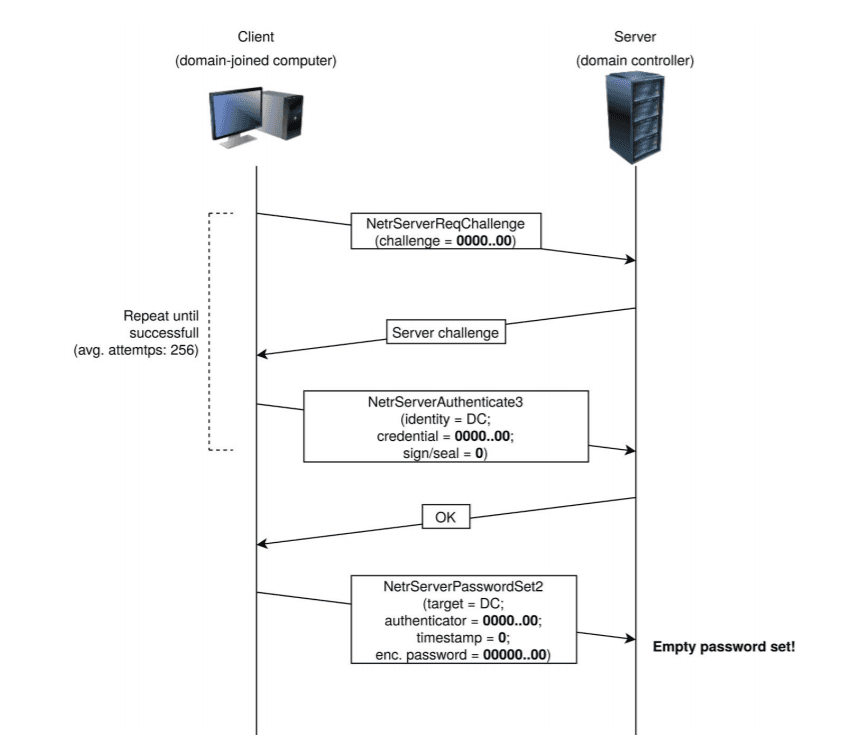
The CVE-2020-1472 flaw is an elevation of privilege that resides in the Netlogon. The Netlogon service is an Authentication Mechanism used in the Windows Client Authentication Architecture which verifies logon requests, and it registers, authenticates, and locates Domain Controllers.

Administrators of enterprise Windows Servers have to install the August 2020 Patch Tuesday to mitigate “unacceptable risk” posed by the flaw to federal networks.

An attacker could also exploit the flaw to disable security features in the Netlogon authentication process and change a computer’s password on the domain controller’s Active Directory.

The only limitation on how to carry out a Zerologon attack is that the attacker must have access to the target network.

The flaw was discovered by researchers from the security firm Secura that also published technical details of the issue along with proof-of-concept exploits.

Researchers from BleepingComputer analyzed one of the samples and discovered that the exploit changes the NTLM hash of the domain controller to “31d6cfe0d16ae931b73c59d7e0c089c0”, which is an empty password.

Secura researchers also released a Python script that uses the Impacket library to test vulnerability for the Zerologon exploit, it could be used by admins to determine if their domain controller is still vulnerable.

Don’t waste time, patch your system now!

[adrotate banner=”9″][adrotate banner=”12″]

Pierluigi Paganini

(SecurityAffairs – hacking, ZeroLogon)

[adrotate banner=”5″]

[adrotate banner=”13″]


