
Security Affairs
U.S. Charges Canadian Man in Alleged Hack of University Supercomputers|Two Barracuda ESG Flaws Could Be Combined for Full Root Access; Patches Released|Cyberattack Hits French Blood Banks as Hackers Target Refrigeration Systems Across Europe|CVE-2026-58868: Critical Android Bug Could Let Attackers Run Remote Code|U.S. CISA adds WordPress flaw to its Known Exploited Vulnerabilities catalog|Binance Hack: How Fake Job Interviews and AI Abuse Led to a $6.34 Billion Attack|Synology Warns of Ransomware Attacks Targeting NAS Devices Running Outdated DSM Versions|Inside XCPE, the botnet that turned 1.3M set-top boxes into proxy servers|NIS2 Makes Board Members Personally Liable for Access Control Decisions|Apple’s spyware notifications reach the Bundestag: what the BSI says to do now|VOLTA, the infostealer that asks an AI which victims are worth the effort|New wave of fridge cyberattacks hits European supermarkets, this time in Belgium, Luxembourg, Sweden and Estonia|U.S. Charges Canadian Man in Alleged Hack of University Supercomputers|Two Barracuda ESG Flaws Could Be Combined for Full Root Access; Patches Released|Cyberattack Hits French Blood Banks as Hackers Target Refrigeration Systems Across Europe|CVE-2026-58868: Critical Android Bug Could Let Attackers Run Remote Code|U.S. CISA adds WordPress flaw to its Known Exploited Vulnerabilities catalog|Binance Hack: How Fake Job Interviews and AI Abuse Led to a $6.34 Billion Attack|Synology Warns of Ransomware Attacks Targeting NAS Devices Running Outdated DSM Versions|Inside XCPE, the botnet that turned 1.3M set-top boxes into proxy servers|NIS2 Makes Board Members Personally Liable for Access Control Decisions|Apple’s spyware notifications reach the Bundestag: what the BSI says to do now|VOLTA, the infostealer that asks an AI which victims are worth the effort|New wave of fridge cyberattacks hits European supermarkets, this time in Belgium, Luxembourg, Sweden and Estonia|
Advertisement

Ad Placeholder

Full Width × 90

Breaking News

Victims of Ziggy ransomware can recover their files for free

The Ziggy ransomware gang has shut down its operations and released the decryption keys fearing the ongoing investigation of law enforcement. Good news for the victims of the Ziggy ransomware, the ransomware operators have shut down their operations and released the victims’ decryption keys. The victims can now recover their encrypted files without needing to pay the ransom. […]

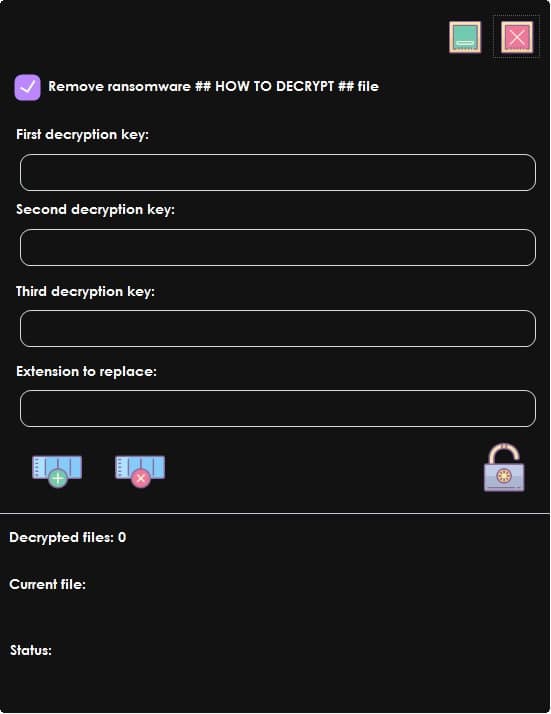
Ziggy ransomware decryptor

Source BleepingComputer

The Ziggy ransomware gang has shut down its operations and released the decryption keys fearing the ongoing investigation of law enforcement.

Good news for the victims of the Ziggy ransomware, the ransomware operators have shut down their operations and released the victims’ decryption keys. The victims can now recover their encrypted files without needing to pay the ransom.

The news was confirmed by the researcher M. Shahpasandi to BleepingComputer. The mastermind behind the Ziggy Ransomware operation announced on Telegram the decision to shut down their activity.

“In an interview with BleepingComputer, the ransomware admin said they created the ransomware to generate money as they live in a “third-world country.”” reported BleepingComputer.

Ransomware operators are concerned about recent law enforcement activity that results in the operation against Netwalker ransomware.

Ziggy ransomware admin leaked a SQL file containing 922 decryption keys along with a decryptor. The ransomware admin also shared the source code for a different decryptor with BleepingComputer that includes offline decryption keys that could be used when the infected system is not connected to the Internet.

In order to decrypt the files, the victims have to provide three decryption keys that are included in the SQL file.

Ransomware infections use offline decryption keys to decrypt victims infected while not being connected to the Internet or the command and control server was unreachable.

As usual, it is recommended to the victims to only use decryptor developed by security firms, because the one released by ransomware operators could hide malware.

Recently another ransomware gang shut down its operations, it was the group behind the Fonix ransomware.

If you want to receive the weekly Security Affairs Newsletter for free subscribe here.

[adrotate banner=”9″][adrotate banner=”12″]

Pierluigi Paganini

(SecurityAffairs – hacking, Ziggy ransomware)

[adrotate banner=”5″]

[adrotate banner=”13″]


