Bitdefender released a decryptor for the ShrinkLocker ransomware, which modifies BitLocker configurations to encrypt a system’s drives.
ShrinkLocker ransomware was first discovered in May 2024 by researchers from Kaspersky. Unlike modern ransomware it doesn’t rely on sophisticated encryption algorithms and modifies BitLocker configurations to encrypt a system’s drives.
It first checks if BitLocker is enabled and, if not, installs it. Then, it re-encrypts the system using a randomly generated password. This unique password is uploaded to a server controlled by the attacker.
The malware then disables default protections to prevent accidental encryption and uses the ‘-UsedSpaceOnly’ flag for faster encryption of only occupied disk space. The random password is generated from network traffic and memory data, making brute-forcing difficult. ShrinkLocker also deletes and reconfigures BitLocker protectors, complicating the recovery of encryption keys.
After the system reboots, the user is prompted to enter the password to unlock the encrypted drive. The attacker’s contact email is displayed on the BitLocker screen, directing victims to pay a ransom for the decryption key.
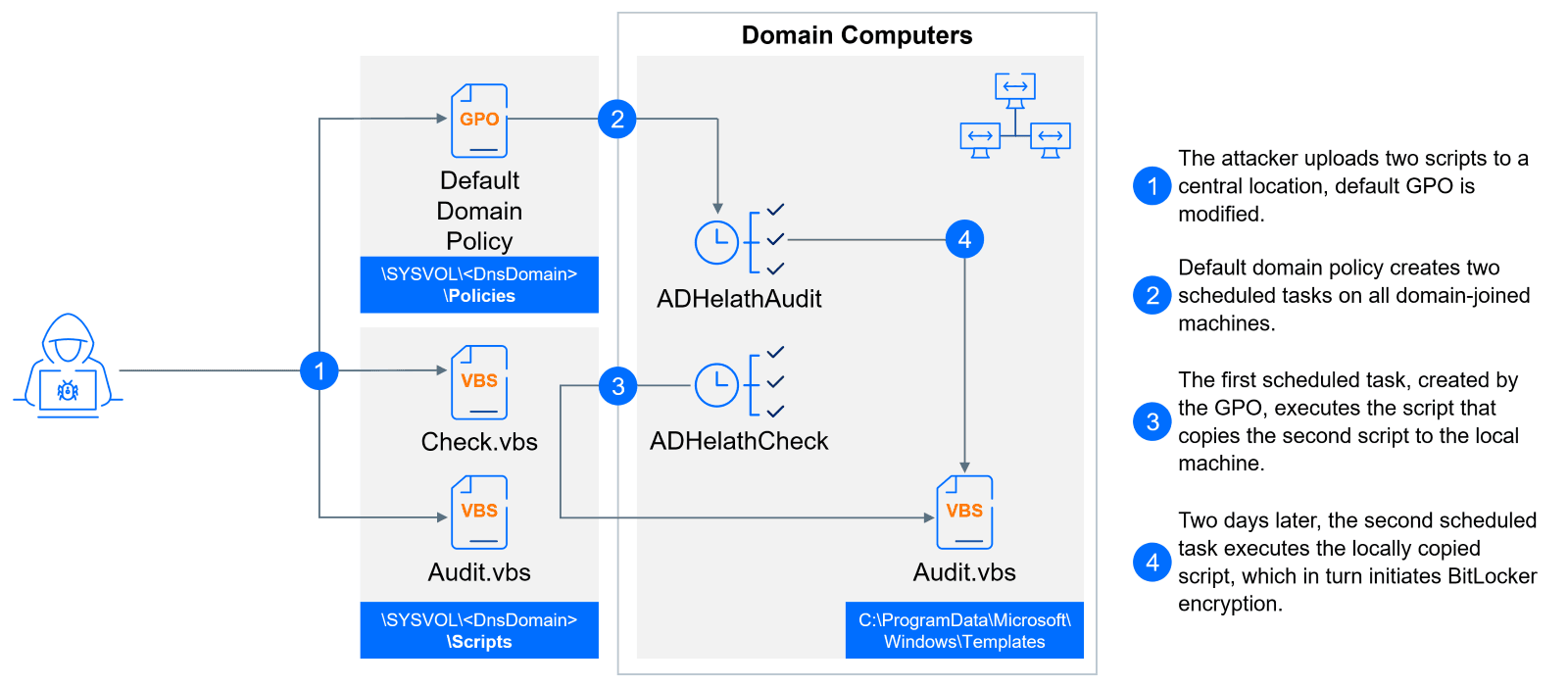
“The attacker’s email is displayed, demanding a ransom for the decryption key. Using Group Policy Objects (GPOs) and scheduled tasks, the ransomware can encrypt multiple systems in a network in as little as 10 minutes per device, allowing for a quick, widespread compromise of a domain.” reads the post published by Bitdefender. “This simplicity makes it appealing to individual threat actors, even those not part of larger ransomware-as-a-service (RaaS) operations.”

Bitdefender researchers speculate the ransomware borrows the code from a benign application written more than ten years ago.
The code is simple enough that even less experienced attackers could use it. However, the investigation revealed positive news: it’s possible to develop a decryptor and configure BitLocker to mitigate such attacks.
Bitdefender observed an attack on a healthcare organization, where threat actors encrypted Windows 10, Windows 11, and Windows Server devices, including backups. The encryption process took just 2.5 hours, causing the organization to lose access to critical systems and potentially hindering patient care.
Bitdefender has released a free decryption tool to help victims recover their files.
“However, in the case of ShrinkLocker, we’ve identified a specific window of opportunity for data recovery immediately after the removal of protectors from BitLocker-encrypted disks.” reads the post published by Bitdefender. “We decided to make this decryptor publicly available, adding to our collection of 32 previously released decryption tools.”

The decryption process may take time depending on victim’s system’s hardware and the encryption’s complexity. Once complete, the decryptor will automatically unlock the drive and disable smart card authentication.
Proactive monitoring of Windows event logs, specifically from the “Microsoft-Windows-BitLocker-API/Management” source, can help organizations detect early stages of BitLocker attacks, such as when attackers test encryption capabilities. Monitoring events with IDs 776 (protector removal) and 773 (suspension) can be particularly useful.
Additionally, configuring Group Policy to store BitLocker recovery information in Active Directory Domain Services (AD DS) and enforcing the policy “Do not enable BitLocker until recovery information is stored to AD DS for operating system drives” can prevent unauthorized encryption. This policy ensures BitLocker can’t be enabled without the recovery information being securely stored, reducing the risk of BitLocker-based attacks.
“ShrinkLocker is a novel ransomware strain that leverages a unique approach to encrypt systems. By exploiting BitLocker, a legitimate Windows feature, it can rapidly encrypt entire drives, including system drives.” concludes the report.
Follow me on Twitter: @securityaffairs and Facebook and Mastodon
(SecurityAffairs – hacking, iPhones)